

Confidence in decision-making is often misunderstood. Most people assume it comes from certainty, clarity, or a strong sense of self. But in reality, confidence tends to appear only after decisions have already been made and tested. This creates a frustrating loop where you wait to feel confident before acting, even though confidence itself depends on …

Most people don’t struggle with making decisions because they lack options. They struggle because their choices feel disconnected from who they think they are—or who they want to be. That gap creates friction, hesitation, and second-guessing. You’re told to “be yourself,” but that advice assumes something stable already exists. In reality, your sense of self …

There is a growing disconnect between the way modern advice is delivered and the way many people actually think. You are told to trust intuition, follow your energy, and listen to internal signals that are rarely defined in concrete terms. For analytical minds, this creates friction. You are not resisting clarity—you are resisting vagueness. At …
There’s a point where thinking stops being useful. Not because you lack intelligence, but because the process itself becomes circular. You analyze every angle, consider every outcome, and still feel no closer to a decision. Instead of clarity, you experience hesitation. Instead of progress, you remain stuck. For many people, especially those who rely on …
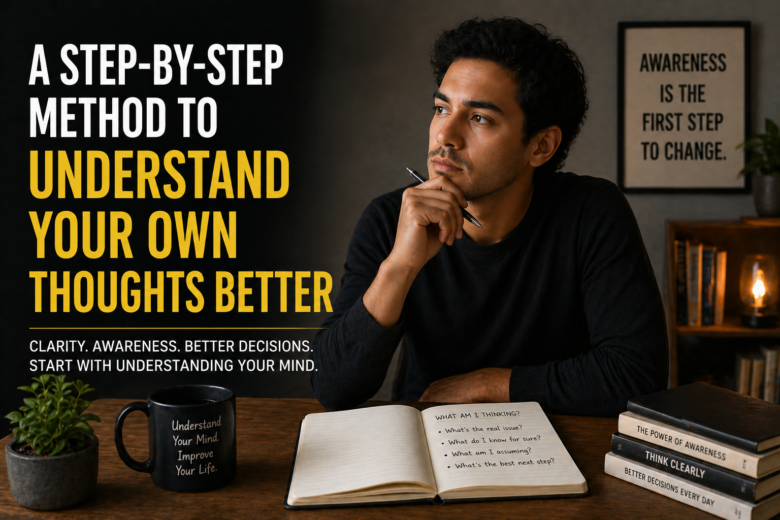
Most people assume they understand their own thoughts. After all, they experience them constantly. But frequency does not equal clarity. In reality, thinking is often automatic, reactive, and unstructured. This creates a strange contradiction: you are always thinking, yet rarely understanding what is actually happening inside your mind. The result is predictable. Overthinking, indecision, emotional …

For years, meditation has been positioned as the default method for gaining clarity. If you feel lost, overwhelmed, or uncertain, the common advice is simple: sit still, breathe, and wait for answers to emerge. But for many people—especially analytical thinkers—this approach feels ineffective. The mind does not quiet down. Instead, it becomes louder, more chaotic, …

There is a specific kind of self-doubt that does not come from lack of ability, but from lack of clarity. You think deeply, analyze thoroughly, and try to make the best possible decisions. Yet despite that effort, you hesitate. Not because you are incapable, but because you are unsure which internal signal to trust. Much …
There is a persistent idea in modern self-development that trusting yourself begins with intuition. You are told to listen to your gut, follow your inner voice, or rely on a deeper sense of knowing. For some people, this works. But for others—especially those who think analytically or question assumptions—this advice creates more confusion than clarity. …
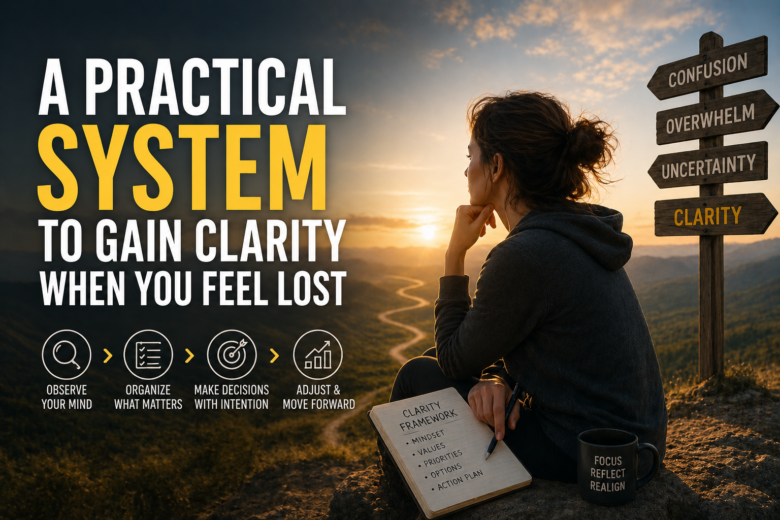
Modern life creates an unusual psychological condition: people have more information, more options, and more autonomy than ever before, yet they often feel more uncertain about their direction. This is not a contradiction in intelligence, but a structural issue in how the mind processes complexity without stable external frameworks. For individuals who are skeptical of …

Modern individuals increasingly find themselves operating without inherited spiritual frameworks, yet still facing the same existential and practical decisions that those frameworks once claimed to solve. This creates a subtle but persistent cognitive tension: the need for guidance remains, while the traditional sources of that guidance no longer feel epistemically valid. For many skeptical thinkers, …