
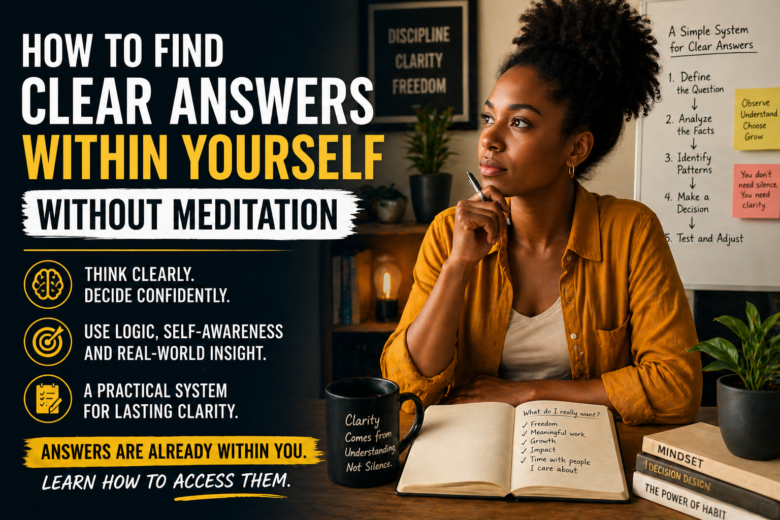
For years, meditation has been positioned as the default method for gaining clarity. If you feel lost, overwhelmed, or uncertain, the common advice is simple: sit still, breathe, and wait for answers to emerge. But for many people—especially analytical thinkers—this approach feels ineffective. The mind does not quiet down. Instead, it becomes louder, more chaotic, …
Month: April 2026

Most people are told that exploring their inner self requires belief in something abstract—religion, energy, or a higher force. For a skeptical or analytical mind, this immediately creates friction. It feels ungrounded, unverifiable, and disconnected from how reality is processed on a logical level. As a result, many people disengage entirely from self-exploration, assuming it …

There is a common assumption that understanding yourself requires silence, introspection, or spiritual practices. You are told to look inward, disconnect from the external world, and uncover something hidden beneath your thoughts. For some, that approach works. For many others, it creates confusion rather than clarity. The problem is not the intention behind these methods. …

There is a growing number of people who no longer rely on traditional sources of direction. Religion, rigid career paths, and predefined life scripts once offered a sense of clarity. Today, many individuals question these structures, not out of rebellion, but out of a need for coherence that aligns with logic and personal experience. Without …

There is a specific kind of frustration that comes from feeling capable but directionless. You know you have potential, you have access to information, and you are aware of opportunities around you—yet nothing seems to lock into place. Instead of clarity, you experience a constant sense of uncertainty that makes even simple decisions feel heavier …
There is a specific kind of self-doubt that does not come from lack of ability, but from lack of clarity. You think deeply, analyze thoroughly, and try to make the best possible decisions. Yet despite that effort, you hesitate. Not because you are incapable, but because you are unsure which internal signal to trust. Much …
There is a persistent idea in modern self-development that trusting yourself begins with intuition. You are told to listen to your gut, follow your inner voice, or rely on a deeper sense of knowing. For some people, this works. But for others—especially those who think analytically or question assumptions—this advice creates more confusion than clarity. …
There is a growing disconnect between how people are told to discover themselves and how they actually operate in reality. Most advice still revolves around slowing down, reflecting deeply, or engaging in practices like meditation and journaling. While these methods can work for some, they often fail for individuals who think analytically, move fast, and …
There is a quiet shift happening beneath the surface of modern life. People are no longer inheriting meaning in the way previous generations did. Religion, tradition, and rigid social roles once provided a ready-made framework for purpose. Today, those structures have weakened, especially among individuals who prioritize logic, autonomy, and evidence over belief systems. What …
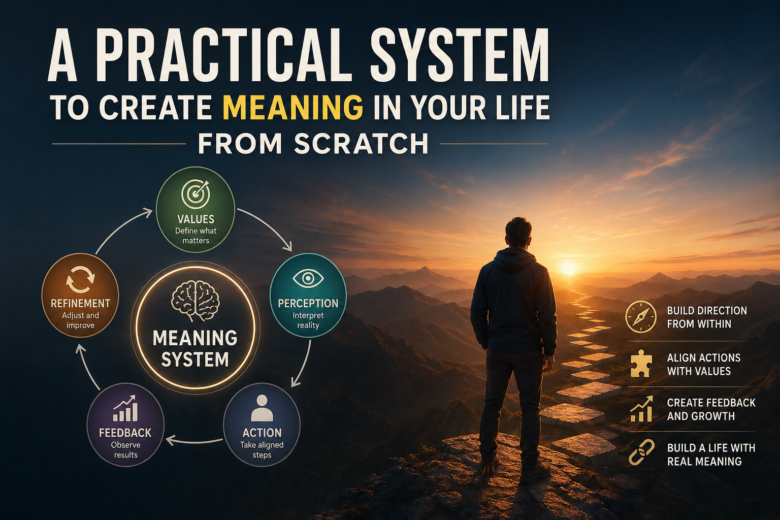
There is a quiet shift happening beneath the surface of modern life. People are no longer inheriting meaning in the way previous generations did. Religion, tradition, and rigid social roles once provided a ready-made framework for purpose. Today, those structures have weakened, especially among individuals who prioritize logic, autonomy, and evidence over belief systems. What …